The Journey of the Java Bean
From a hillside in Matagalpa to roasters around Lake Michigan, partly under sail. We followed our Java the whole way and met the people who roast it at the other...

On The Road in the Midwest
Now Shipping from Tailwind Chicago
On The Water to Europe - Announcing a New Sail Freight Partnership
The Journey of the Java Bean: From Ethiopia to Nicaragua
Introducing New Green Coffee Sample Packs
On The Road in the Midwest
From Northwest Indiana to Grand Rapids MI, we’re on the road dropping off samples. Have you received your samples yet?
It was a pleasure meeting the following roasters in the midwest on our recent single-day tour:
José Marín of IXXA Roasters, Scott Ott of Maple City Roasters, Arick Davis from Last Mile Cafe, Andrew Grassmick at Morningsong Coffee Roasters, Casey Routledge at Madcap Coffee, Scott Dorsch at Aldea Coffee, and Aaron Darling of Infusco Coffee.
If you’d like samples, just let me know! sales@elquetzal.coffee.

Now Shipping from Tailwind Chicago
Tailwind Roasting Collaborative — Chicago’s Coffee Incubator
Based in Chicago’s Goose Island district, Tailwind is a co-roastery that gives aspiring and established roasters access to commercial equipment, training, and community. Whether you want to roast your own coffee by the hour, need toll roasting or private labeling, or just want expert guidance on profiles and cupping, Tailwind lowers the barrier to entry. It’s where Chicago’s next generation of coffee roasters sharpen their craft.

Tastings and pickups from Tailwind’s Goose Island storage facility will be available for booking starting September 15th. Simply respond to this email to reserve a time to come in and taste. Contact Sarah Cline Parker at: scp@tailwindroasting.com.

On The Water to Europe - Now Partnering with Grain De Sail
We’re excited to announce a new sail freight partnership with Grain De Sail, out of Morlaix, France.

CO2 emissions are reduced dramatically with sail freight.
Grain de Sail — Sailing Coffee & Cargo Across the Atlantic
Headquartered in Morlaix, France, Grain de Sail is proving that global trade doesn’t have to mean high emissions. Founded in 2010, the company roasts coffee, makes chocolate, and operates the world’s first modern cargo sailboats — built to move goods sustainably across oceans.
What They Do:
- Sail Freight: Ships coffee, cocoa, wine, and other goods with up to 90% fewer emissions than traditional cargo.
- Coffee & Chocolate: Roasts coffee and produces chocolate locally in Brittany, using organic and fair-sourced ingredients.
- Low-Carbon Logistics: Offers freight forwarding services for businesses looking to cut their transport footprint.
Why It Matters:
Grain de Sail isn’t just a roaster or a chocolatier — it’s a working model of sustainable supply chains. By blending craft products with renewable shipping, they’re setting the standard for how goods should move in the 21st century.
🌱 The Java Bean Journey on Our Nicaraguan Coffee Farm
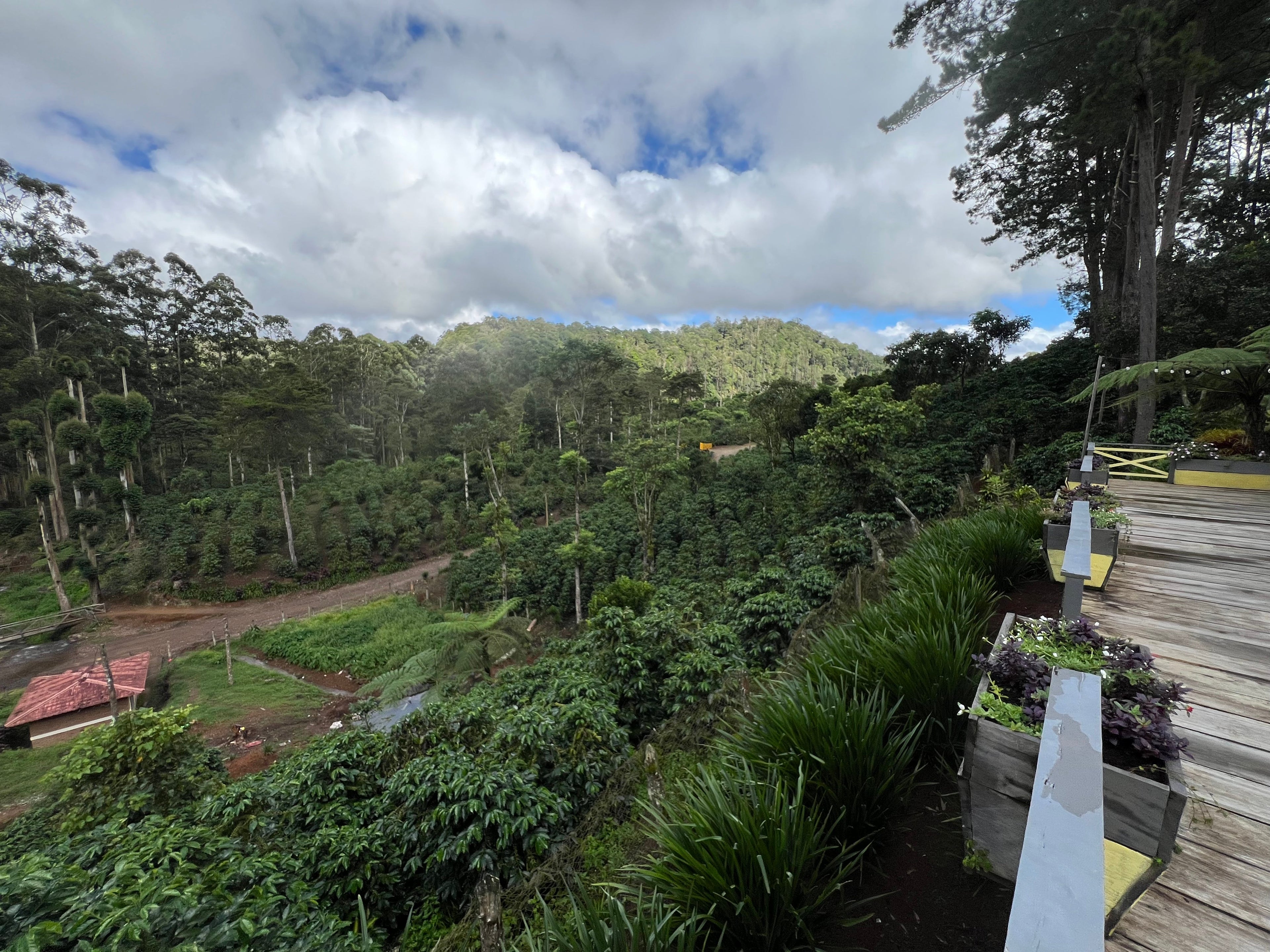
Work in the Matagalpa Highlands

A terroir and climate like no other. Come to Matagalpa Country
At 1,200+ meters in Matagalpa, we cultivate Java beneath the broad leaves of plantain trees — a natural shade that protects the cherries and enriches the soil with potassium. This layered agroforestry system strengthens the farm’s resilience. The slower maturation deepens sweetness and complexity. Seedlings are often planted directly into soil, a choice that avoids single-use plastics and allows each plant to root more firmly from the start.
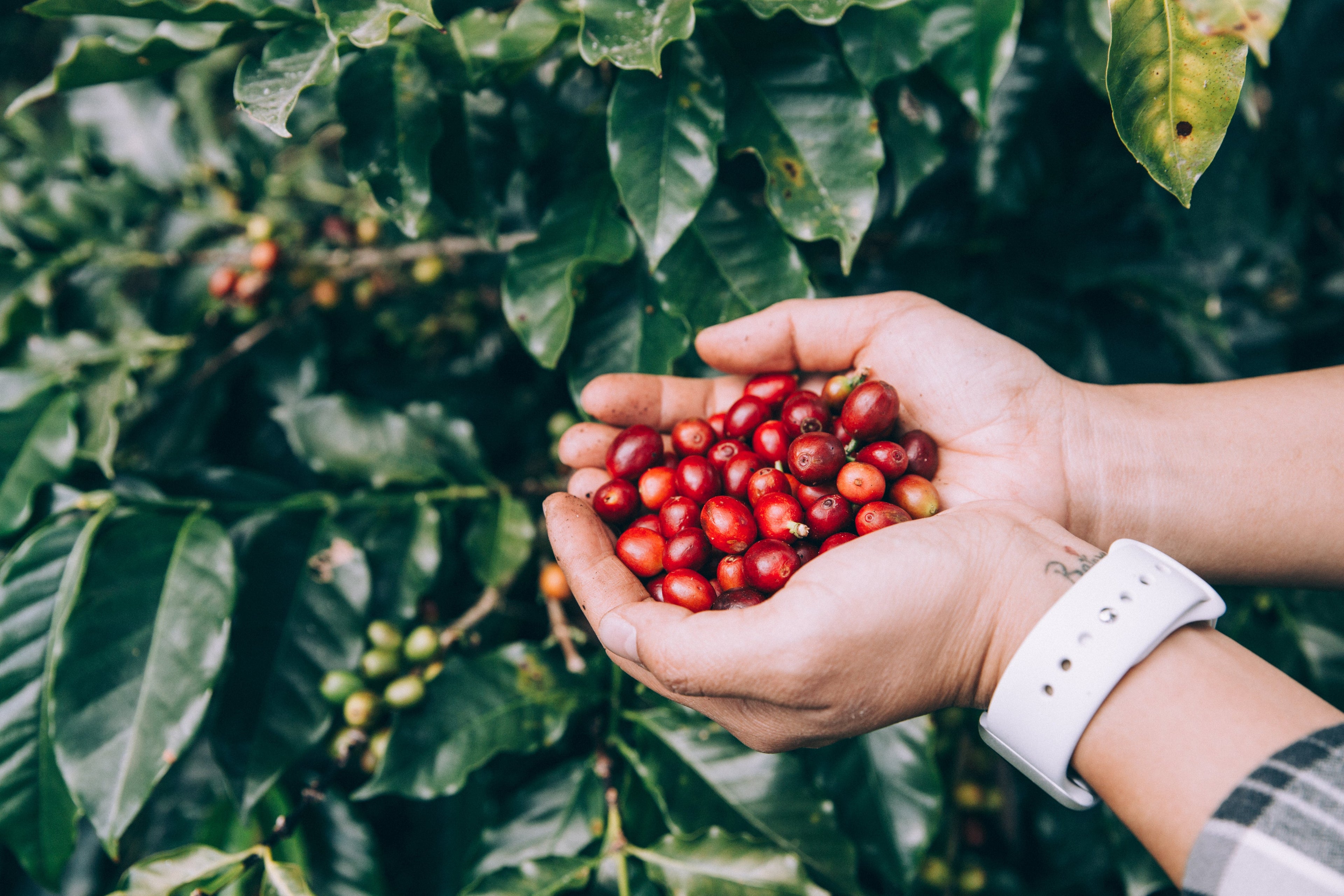
Patience is required: Java takes three years to yield its first cherries. Each harvest, our crew expands from 50 year-round staff to 300 seasonal pickers. They move through the rows in waves, selecting only the ripest cherries by hand. Labor-intensive, yes — but quality demands care.
At first light in Matagalpa, the Java variety of Arabica stands tall and narrow, bronze-tipped leaves catching the chill. They look different from the everyday workhorses here: more upright, more deliberate. If a plant can be poised, Java is.
“Elegant, steady, and quietly distinctive — Java is a varietal that rewards patience.”

The Long Journey of Java
Java’s story begins in Ethiopia, the birthplace of Arabica. In the 1800s, Dutch traders carried it to Indonesia, where it took on its name. Later, breeders in Cameroon found it tolerant to coffee-berry disease. In 1991, researchers brought it to Central America.
Don Paco — Nicaragua’s first Ph.D. agronomist — saw its promise early. He planted Java on our volcanic hillsides long before most growers knew the name, betting on a varietal that would prove both resilient and refined.
🌱 A Variety Like No Other

The shade, just right.
Java isn’t common in Nicaragua. Its presence in our fields is a rarity. The plants stand tall and upright, their bronze new leaves catching the sun. They carry genetic gifts: tolerance to coffee-berry disease, strength in highland climates, and a knack for thriving with fewer fertilizer inputs than many modern varieties.
But it’s the cup that has made Java our signature:
- Caramel sweetness and honeycrisp apple brightness
- Gentle citrus snap, sometimes a vanilla or lemon-cookie note
- Elegant like Geisha, but more approachable, with a creamy body
Consistently scoring in the mid-80s, Java is refined yet reliable — exotic without being fussy.
A Legacy of Family and Innovation

The man who started El Quetzal down the path of coffee excellence.
Innovation runs deep here. Don Paco — Nicaragua’s first Ph.D. agronomist — pioneered new growing methods in the 1960s. He experimented with shade, airflow, and soil health long before “micro-lots” entered the vocabulary. Today, we carry that spirit forward:
- Compost replacing chemicals wherever possible
- Ongoing experiments in fermentation (washed, natural, anaerobic)
- Commitment to sustainability with hydroelectric power on site
Java embodies that blend of science and tradition: progressive, but always rooted in family stewardship.
Water, Power, and Continuity

One waterfall to power it all.
Behind every harvest, it isn’t only hands that matter — it’s also the resources of the land itself. El Quetzal’s hydroelectric plant, fed by mountain springs and waterfalls, has quietly powered the farm for decades. No diesel hum, no utility bills — just water turning into light, a reminder of how self-sufficiency sustains this place.
After harvest, cherries move to our open-air drying patios — an artisanal process where honey and natural lots take on their character long before they leave the farm. These everyday scenes — the shimmer of parchment on the patio, the rush of spring water cutting through rock.
“Coffee doesn’t thrive in isolation. It takes land, water, and care working in rhythm.” - Don Paco
Community & Sustainability

On this farm, sustainability is more than a label. It’s lived every day:
- Housing and daily meals for workers
- A schoolhouse and adult literacy programs
- Hydroelectric power supplying the farm for decades
- Wi-Fi added so children can access online learning
The same care that goes into nurturing a Java seedling extends to nurturing people and the environment around it.
Roasted Coffee - Get It Now
Freshly roasted microlots are available! Sample these exceptional roasts this summer.
For a limited time, bring El Quetzal into your cup with free shipping, when your order exceeds $35.

Now available! Place your order today while this artisan batch of roasted coffee lasts.
Origin Visits now Available for Pre-Booking!
Already planning to visit Central America this winter? Stop in and say hello! We’d love to host you.
We’re rapidly readying our farm to host as many roasters and importers as possible. Best times to visit:
December - March, 2026
Interested in stopping by? Please email us at: ana@elquetzal.coffee so we can coordinate your time to visit.
Green Coffee Inventory Available
Attached is what is currently on offer: Download Here