Mornings in Matagalpa with Yellow Catuai
Yellow Catuai ripens to gold rather than red, which makes picking it a matter of judgement rather than glancing. A morning walk through the nursery and the terraces, and what...

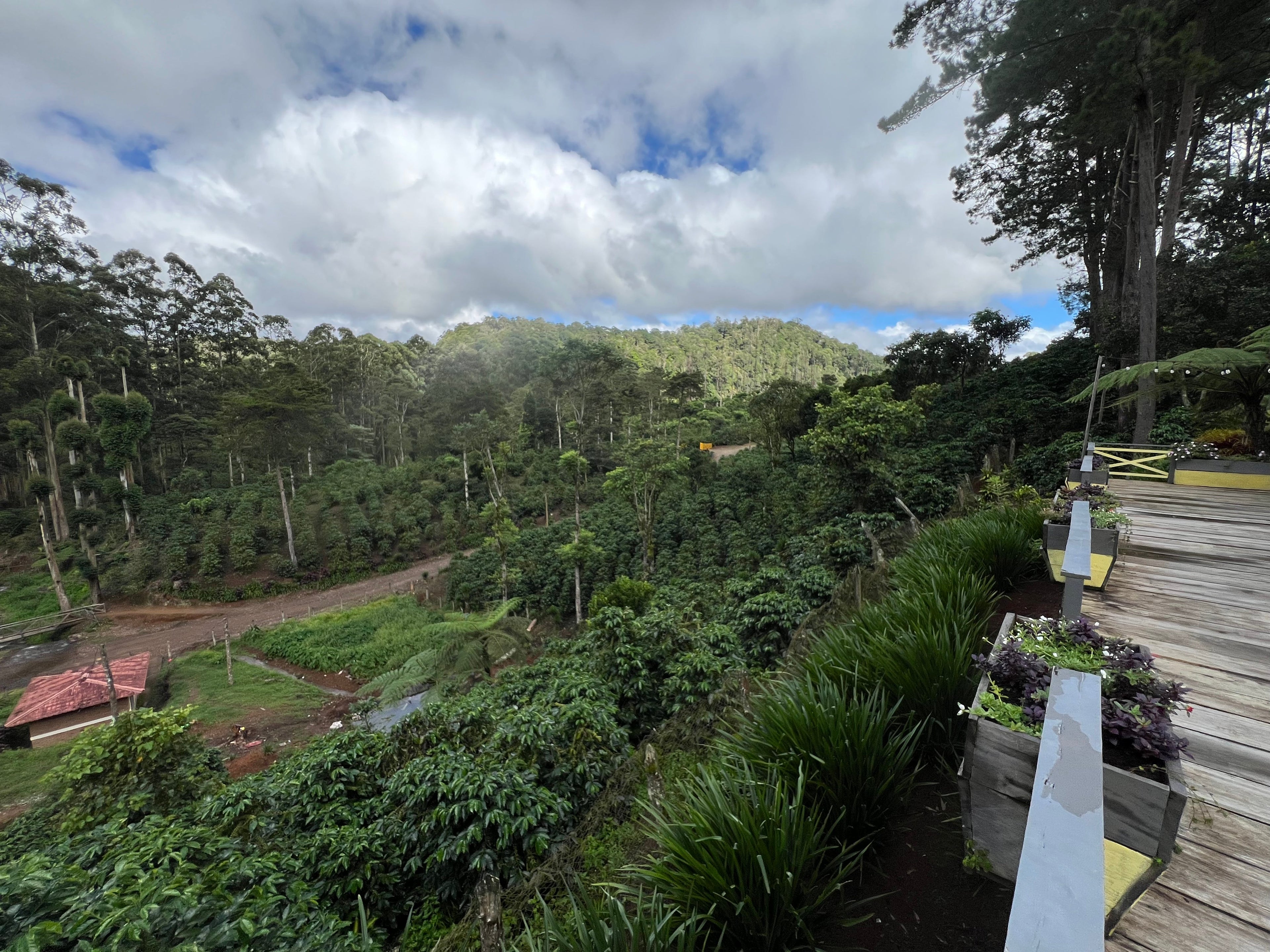
It’s 5:22 a.m. in The Matagalpa mountains.
The air is cool enough to see it move. A thin mist hangs across the terrace.
You hear the place before you see it: a waterfall’s hush, the clink of enamel mugs, boots on damp soil. Light comes reluctantly — pewter, then pearl, then gold.

Anamama is already walking. She doesn’t hurry. Haste makes you miss things — a leaf, a branch, the weight of a ready cherry. She moves row to row with intent, eyes trained, hands open, posture angled to catch what the morning wants to say.
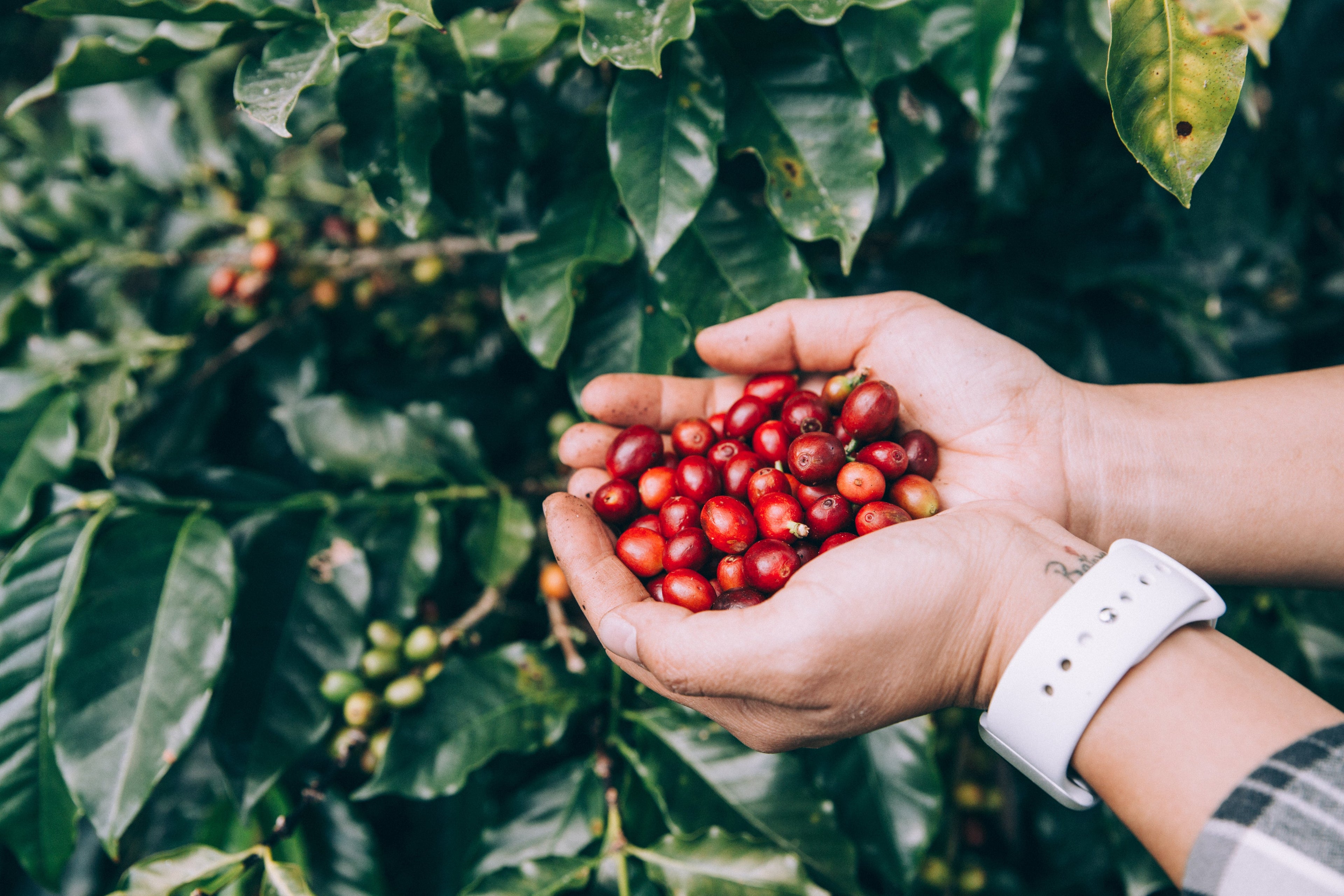
The Yellow Catuai is always a few steps ahead of the sun. When light finally catches those cherries, they don’t blush red. They glow yellow — sure of themselves, lit from within. Visitors expect red and find lanterns.
Anamama cups a cluster and tilts it toward the east. “Mira,” she says. “We wait today. One more hour.” She gestures to a branch just shy of radiant. “And these — hoy.”
The woman who made the morning hers

Her mornings once began in hospitals, not fields. As a registered nurse, she measured vitals, charted symptoms, and cared for patients through long shifts. Later, as a Peace Corps medical officer in Nicaragua, she managed a clinic and dozens of volunteers spread across the country. Her training deepened: a bachelor’s in health sciences, a master’s in end-of-life care, and coursework in microbiology and soil science.
She jokes that she only changed patients. “Infection became fungus. Vitals became microclimate. Charts became field notes.”
The continuity feels seamless to her. The body gets too warm, too wet, too cold — and suffers. So does a plant. You watch for signs. You intervene at the right moment, not too early, not too late. You don’t just treat symptoms; you understand systems.
Her father, a plant physiologist, left her a vocabulary she didn’t realize she had. Growing up, she absorbed fragments — photosynthesis, respiration, soil balance. It wasn’t a textbook education then, just background noise. But years later, those words returned when she began studying soil microbiomes. “I remembered more than I thought,” she says. “It wasn’t foreign. Humans and plants, both live entities. Very similar.”
So when she returned to the family farm, it wasn’t nostalgia that brought her back. It was necessity — and the bet that attention still moves the needle more than strategy decks.
See how mornings at El Quetzal shape the cup — email sales@elquetzal.coffee to learn more.
A varietal that keeps its own counsel

Yellow Catuai is modest. Compact, tidy, rarely in headlines. That suits her. Some varietals announce themselves; this one rewards patience.
Its gifts are precise. Too soon and it’s shy; too late and it thickens. Get it right and you taste clarity: honey that doesn’t shout, citrus with boundaries, a finish you recognize as restraint.
If Java is the familiar tune, Yellow Catuai is the second track you only learn to love after a few listens.
Patience is the varietal’s language — and patience is what Anamama learned to cultivate long before she came back to the farm.
Microlots as a way of seeing

The farm is a patchwork of bowls, shelves, and ridges where volcanoes still dictate the rules. Microlot isn’t a marketing word here; it’s vocabulary. Shade, soil, and wind decide flavor.
The morning reveals whether the mulch was too thick, the pruning too generous, the breeze enough. Small adjustments make big differences. “The mornings tell you in centimeters,” she says. “If you don’t walk, you don’t learn.”
Her nursing habits show up in the way she manages microlots. Instead of rushing for yield, she tracks detail: sheen, weight, leaf angle, soil temperature. Where a spreadsheet sees numbers, she sees patterns. “Attention is slow. It’s handwork,” she repeats, half mantra, half reminder.
Curious how Ana translates her process into cup quality? Email sales@elquetzal.coffee to schedule a cupping call
Hands that turn light into work

By sunrise the pickers are inside the rows, bodies turned to the light. Yellow Catuai resists lazy picking. Its yellow color is trickier than red. You learn to see sheen more than hue, to feel weight more than give. Good pickers move like readers who never trip over a line.
Mid-morning, the mist lifts. A pause for water and talk of last night’s game or a cousin’s baby. Anamama listens — farm news hides in small talk. Then the work resumes, careful and steady.
This listening is part of her leadership. In a culture where machismo once defined roles, her presence as a woman managing men might have been met with skepticism. Instead, respect came quickly. She upgraded worker housing, painted walls, planted flowers. She showed dignity by design. Respect followed naturally.
Taste the difference patience makes — email sales@elquetzal.coffee to request a Yellow Catuai sample.
Climate drift, modern tools (Image: traceability tag on branch, shade cloth overhead)

Her father, who passed in 2007, never had to contend with climate drift. He built systems based on stable cycles. But eighteen years later, the farm feels the difference: hotter peaks, harsher rains, leaf scorch that appears in photographs. “Two or three degrees is all it takes,” she says. “Some countries have already given up coffee.”
She refuses to let El Quetzal do the same.
Sun protectors now shield rows that would have burned. Traceability tags follow each bag from picker to mill, an insurance policy against losing flavor, data, or accountability. She enrolls in courses on soil microbiomes, botany, and coffee history from universities abroad. Education never stops. “If I don’t know,” she says, “I learn, then we do.”
The nursery’s promise

Seedlings stand like notes on a staff; the song will come later. Plastic sleeves are replaced by trays used again and again. Anamama crouches, thumb reading soil moisture. The morning smells clean and young — earth, sweetness, compost.
“If you want a plant to be generous,” she says, “you start by feeding the ground.”
It’s the same clinical logic she applied to patients: nutrition before intervention, prevention before treatment.
We can share our microlot map and availability — just email sales@elquetzal.coffee.
Regeneration and respect

Not all upgrades are technical. She bought food for the two stray dogs that shadow her daily. Springs became a lagoon after she half-joked with a farmhand, “Want a pond?” He returned a week later, shovels and sweat having turned the idea into water and fish.
Now tilapia dart in the pool, butterflies gather near blossoms, and new flowers line the housing. She calls it necessity; outsiders call it regenerative farming. “It’s what you do if you want the place to stay honest,” she says.
Request our roast guide or order roasted microlot samples — email sales@elquetzal.coffee.
Roast notes for people who listen with heat

Keep the charge gentle. Let the drying work. Stretch the Maillard long enough to wake sugars without dulling the acid. First crack comes tidy. Don’t chase it. You’re aiming for line: honey–citrus balance, a silk-like body, a restrained finish. Yellow Catuai prefers posture over swagger.
For the dining room and the bar

Yellow Catuai amplifies rather than dominates. With dairy, it behaves. Without, it clarifies. It makes pastry honest, dessert rich but balanced. At brunch it sits beside citrus salad or stone fruit without scrambling. After dinner, it whispers almond and toasted sugar.
Kitchen cuppings are small and informal. Staff slurp and laugh. They never use the word bergamot but know when the roast is singing.
The humble varietal that wins the day

Buyers often begin with famous names. But if they walk the rows in morning light, their questions change by lunch: How do you hold the honey without losing citrus? Can we try a slower drying phase?
Yellow Catuai doesn’t seduce with perfume; it recruits with precision.
The hour when light becomes flavor

By afternoon, the cherries that waited are off the branch — sorted, rinsed, spread. Small decisions in the first light become flavor. Precision becomes narrative. Narrative becomes value.
What a roaster takes home
You leave with bags and a map that looks more like a golfer’s course guide than a farm sketch: arrows for wind, icons for shade, dotted lines for mist. Each mark is a choice morning asked for. Each choice is flavor carried home.
At the roaster, the coffee behaves. The curve draws as planned. The room smells of honey browning, citrus brightening. The cooling tray offers beans the color of morning light.
The cup stills the room. Someone says, “It’s clean.” Someone else says, “It lasts.” That’s all the poetry you need.
What to remember
Yellow Catuai doesn’t seek applause. It rewards patience. So does she.
Morning after morning, centimeter by centimeter, Anamama listens to leaves the way she once listened to lungs and hearts. Precision becomes narrative. Narrative becomes value. And in the end, attention is what lingers in the cup.
Introducing New Green Coffee Sample Packs
Roasted Coffee - Get It Now
Freshly roasted microlots are available! Sample these exceptional roasts this summer.
For a limited time, bring El Quetzal into your cup with free shipping, when your order exceeds $35.

Now available! Place your order today while this artisan batch of roasted coffee lasts.
Origin Visits now Available for Pre-Booking!
Already planning to visit Central America this winter? Stop in and say hello! We’d love to host you.
We’re rapidly readying our farm to host as many roasters and importers as possible. Best times to visit:
December - March, 2026
Interested in stopping by? Please email us at: ana@elquetzal.coffee so we can coordinate your time to visit.
Green Coffee Inventory Available
Attached is what is currently on offer: Download Here