
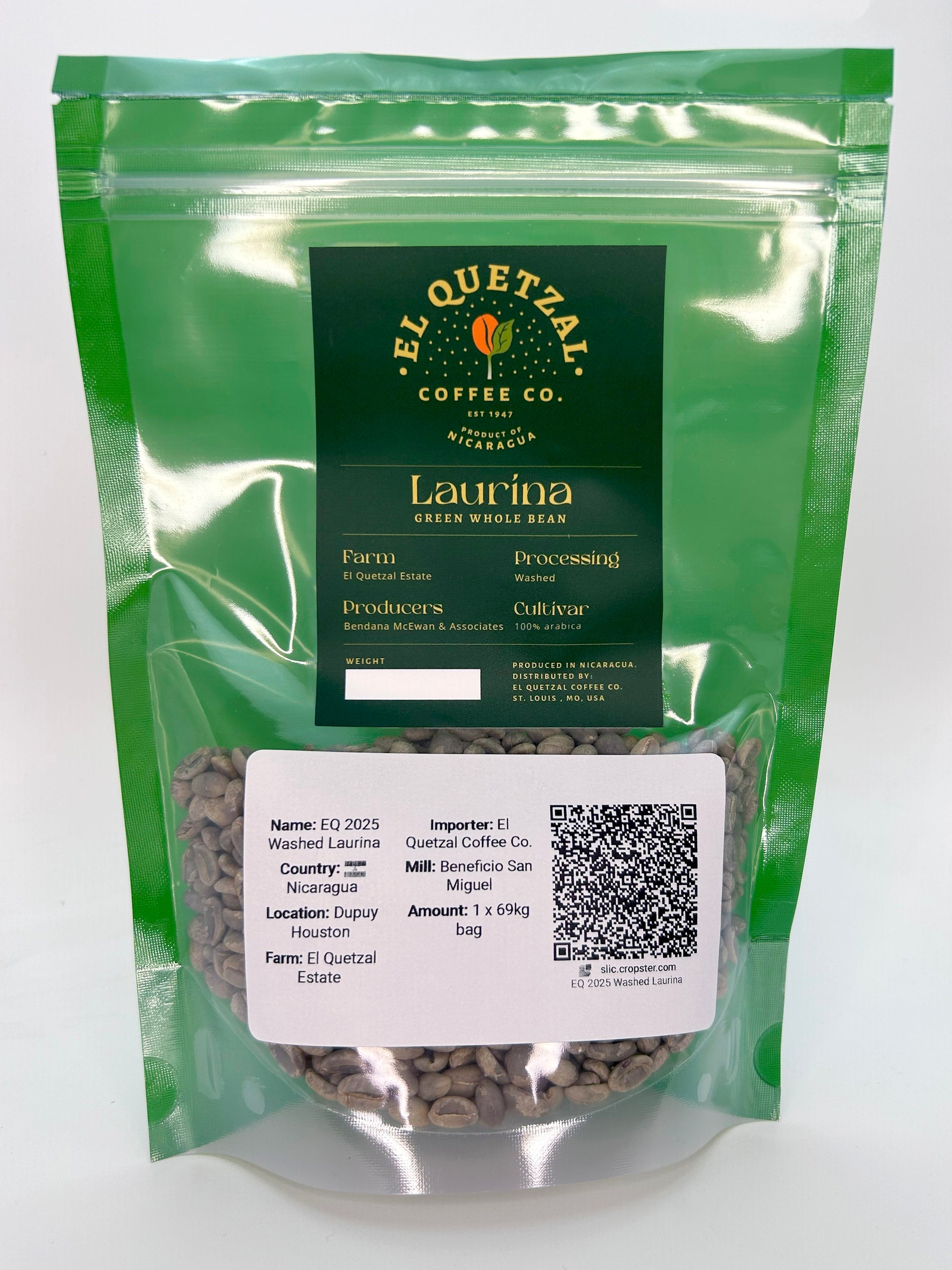
Laurina Green Coffee | Washed
- Regular price
- $8.00
- Sale price
- $8.00
- Regular price
- $0.00



Product details
Description
Few have seen her. Fewer have tasted. Laurina coffee beans grow in the peaceful breezes of Finca El Quetzal, high in Nicaragua's Matagalpa highlands — one of the rarest specialty coffee microlots we produce. If you've been searching for where to buy Laurina coffee, you've found one of the few farms in the world that grows it.
What Is Laurina Coffee?
Laurina — also known as Bourbon Pointu — is a natural genetic mutation of the Bourbon variety of Arabica coffee. Unlike chemically processed decaf, Laurina is born low-caffeine. The plant itself produces 40-60% less caffeine than standard Arabica, with zero chemical intervention. No Swiss Water Process, no methylene chloride, no CO2 extraction. This is simply how the cherry grows.
The beans are distinctive: a pointed shape and small screen size that experienced roasters immediately recognize. Every lot is hand-harvested from one of the smallest parcels on our mountain — small enough to walk across in minutes, but capable of producing one of the most expressive profiles we've ever cupped.
Current cupping score: 85
Tasting Notes
Our Laurina delivers a complex, layered cup that consistently surprises:
- Apricot and raspberry — bright stone fruit and berry up front
- Lemon zest — clean citric brightness
- Milk chocolate — gentle sweetness in the mid-palate
- White tea — a delicate, floral quality rare in coffee
- Silky body with juicy texture
- Clean, gentle acidity — no harshness, no bitterness
Many specialty roasters compare Laurina to a refined Geisha — but with softer edges, more nuance, and a tea-like quality that sets it apart. For roasters building a lineup of rare single origins, Laurina occupies a category of its own.
How Much Caffeine Is in Laurina Coffee?
One of the most common questions we hear: how much caffeine is there in Laurina? The answer: roughly one-third the caffeine of standard Arabica — making Laurina one of the lowest-caffeine naturally occurring coffees in the world.
| Coffee Type | Avg. Caffeine Content |
|---|---|
| Robusta | 2.2% - 2.7% |
| Standard Arabica | 1.2% - 1.5% |
| Laurina (Bourbon Pointu) | 0.4% - 0.6% |
This makes Laurina ideal for afternoon service, caffeine-sensitive customers, and anyone who wants the full specialty coffee experience without the stimulant load. Unlike decaf, the flavor profile is not diminished by processing — it is the plant's natural expression.
Where Does Our Laurina Grow?
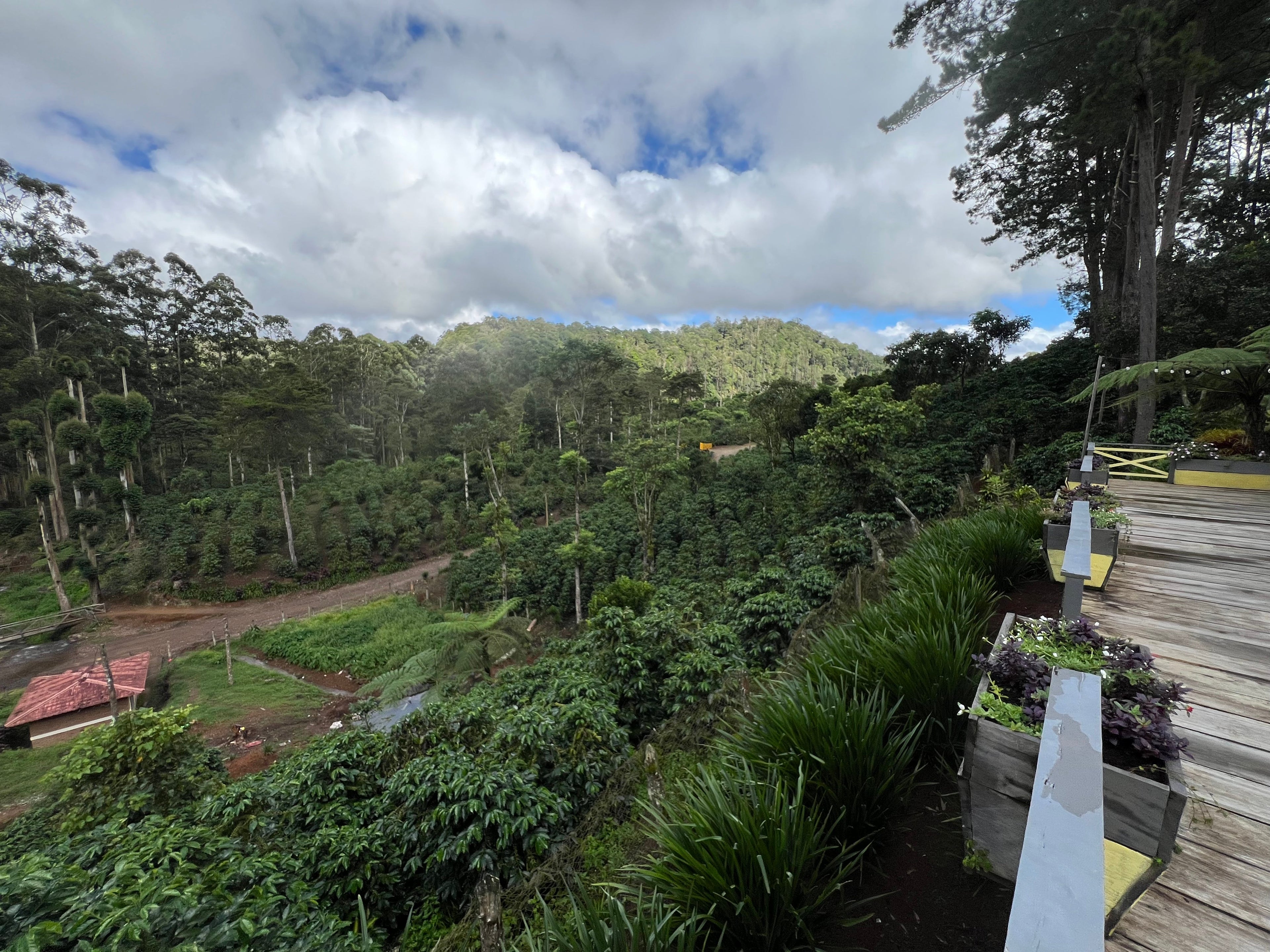
Laurina grows in only a handful of places worldwide, but Nicaragua has quietly become its strongest home in Central America. At Finca El Quetzal, our Laurina trees sit at high elevation on volcanic soil, nurtured by:
- Shade-grown eucalyptus canopies planted in the 1960s by Dr. Frank Bendaña, the farm's founder
- Hydroelectric power from the farm's own waterfall — nearly zero ecological footprint
- Daily soil and nutrient management by a multi-generation team who have tended these micro-parcels for decades
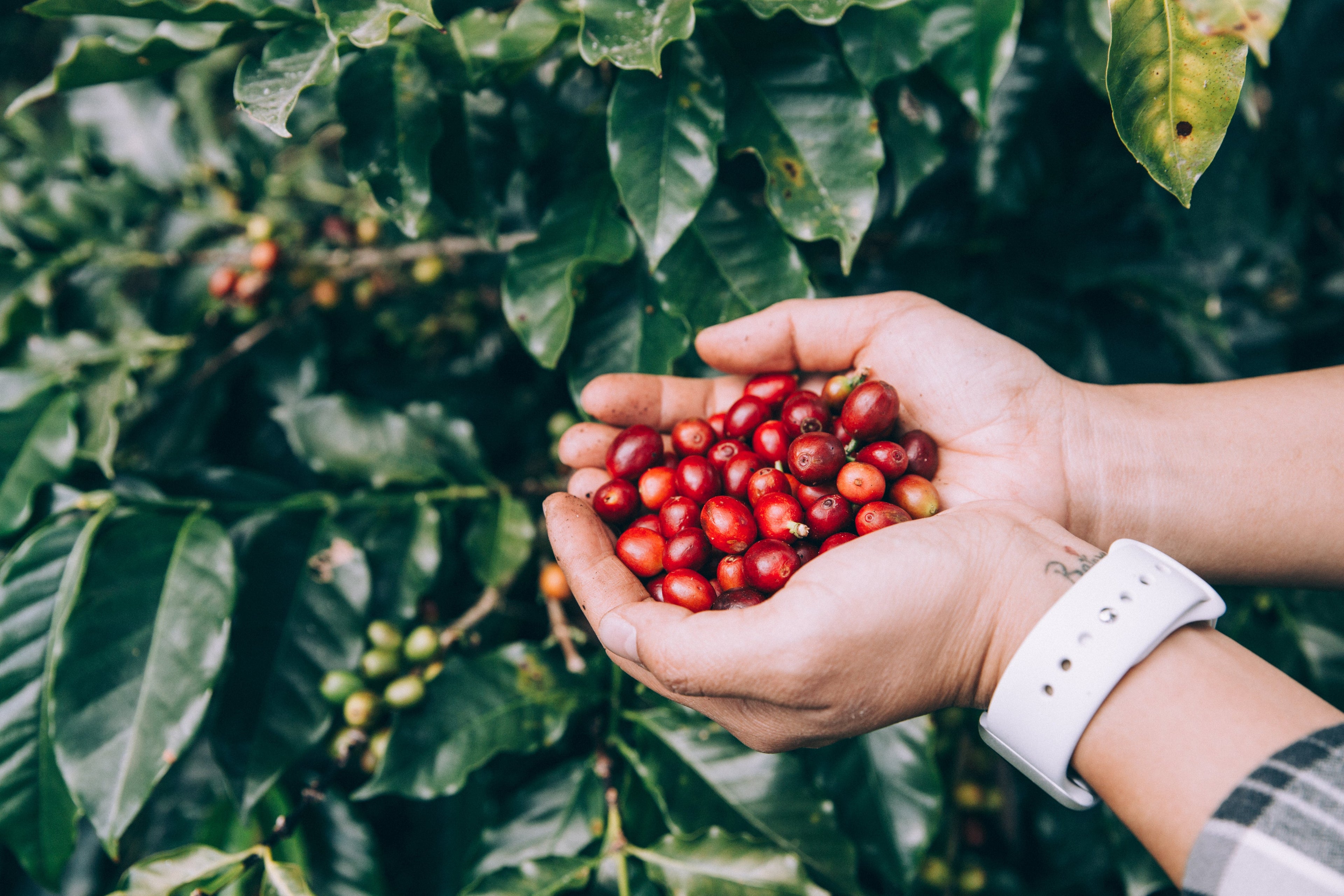
- Hand-harvesting by experienced pickers who select only peak-ripeness cherries
The farm has produced specialty coffee continuously since 1947 — 78 years of unbroken cultivation on the same volcanic hillsides.
How to Brew Laurina
Pour-over (V60 / Chemex): Use a 1:15 ratio with 195-200°F water and a medium grind. Give it a longer bloom (45-60 seconds) to highlight the natural sweetness and allow the tea-like qualities to develop.
Espresso: 18g in, 36g out, 28-32 seconds. Expect a juicy, round shot with bright fruit acidity. Because Laurina is naturally lower in caffeine, a slightly finer grind helps extract more depth and body.
Cold Brew: Laurina makes an exceptional cold brew — the low caffeine and natural sweetness create a smooth, drinkable concentrate that works well undiluted.
Why Is Laurina So Rare?
Laurina trees are low-yield, fragile, and slow to mature. They produce significantly fewer cherries than standard Arabica varieties, require more careful attention during cultivation, and are expensive to grow at any scale. Most coffee farmers avoid them entirely.
Production is extremely limited. Contact us to secure allocation for 2027.
Explore our other rare varietals: Pacamara | Java | Villa Sarchi | Geisha
Product Details
Lab Tested & Quality Verified
Bendaña McEwan & Asociados — Beneficio San Miguel

Geisha (Washed)

86
SHG Especial
“Complex, jasmine aroma, peach and apple”
1 / 6 — Use ← → arrows to navigate
Java (Anaerobic Honey)

86
SHG
“Fruity, spiced, creamy, clean cup”
2 / 6 — Use ← → arrows to navigate
Java (Washed)

85
SHG
“Floral, jasmine, citrus, eucalyptus, juicy”
3 / 6 — Use ← → arrows to navigate
Yellow Catuai (Washed)

84
SHG
“Sweet, panela, vanilla, creamy, tropical”
4 / 6 — Use ← → arrows to navigate
Marsellesa (Washed)

84
SHG
“Balanced, creamy, floral, vanilla, caramel”
5 / 6 — Use ← → arrows to navigate
Parainema (Washed)

83
SHG
“Citrus, fruity, creamy, panela, chocolate”
6 / 6 — Use ← → arrows to navigate
Recommended Coffees
Look around, we've got some fun stuff.
- Choosing a selection results in a full page refresh.